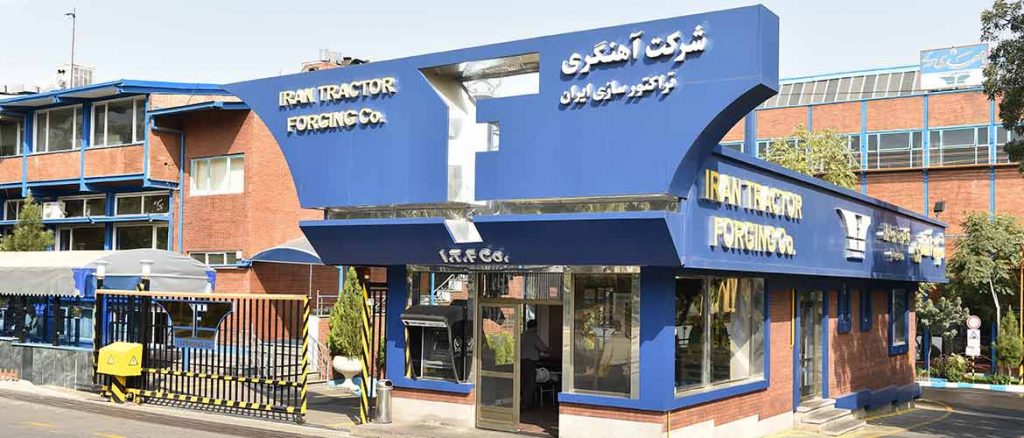
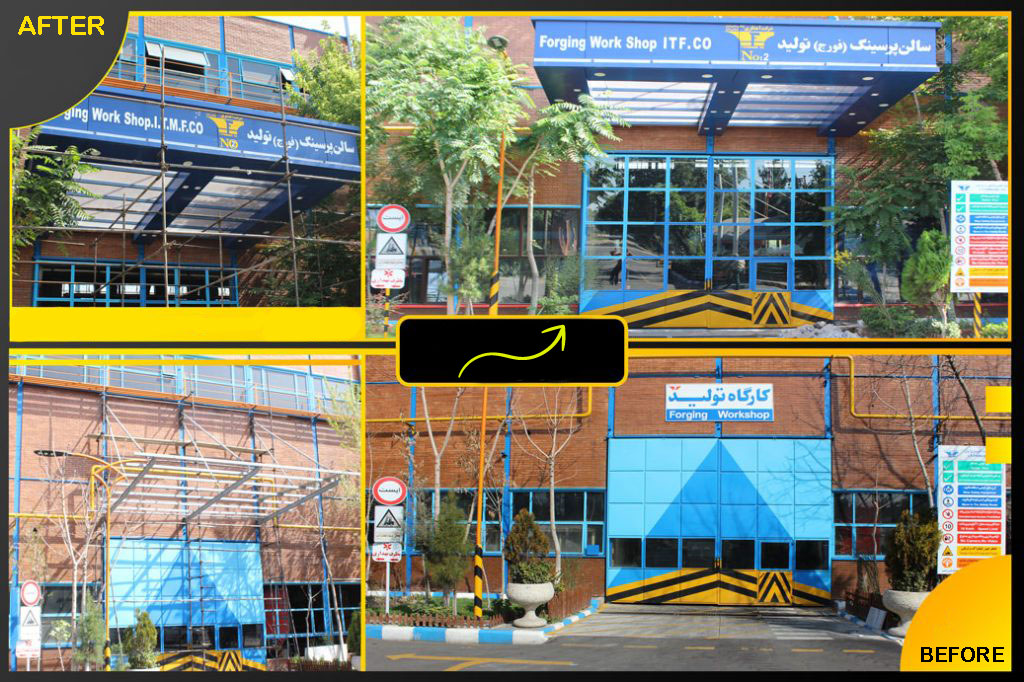
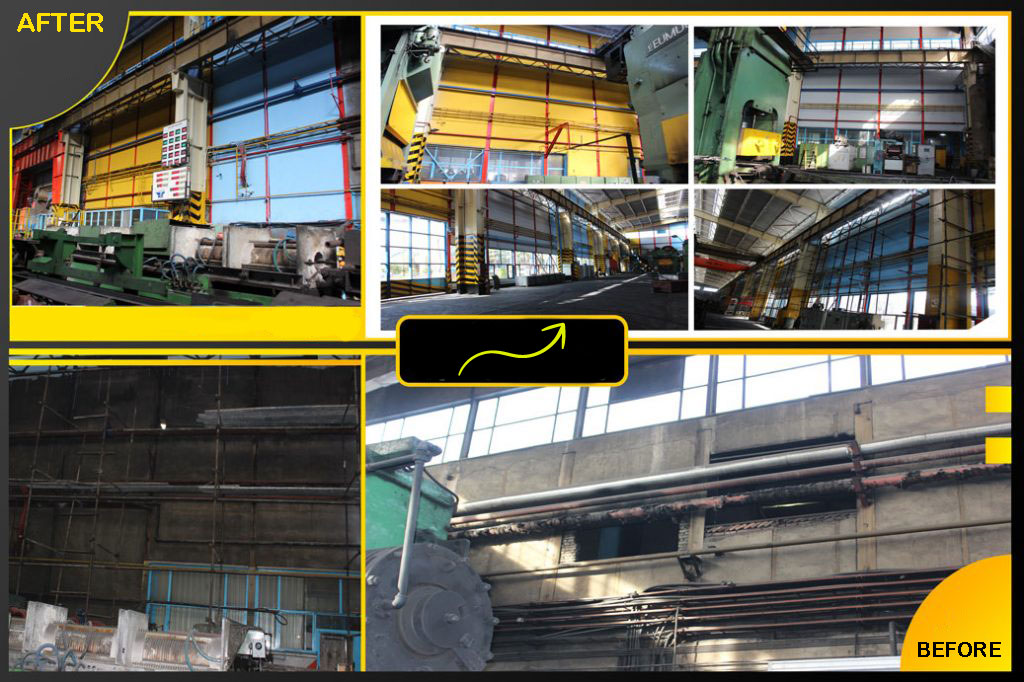
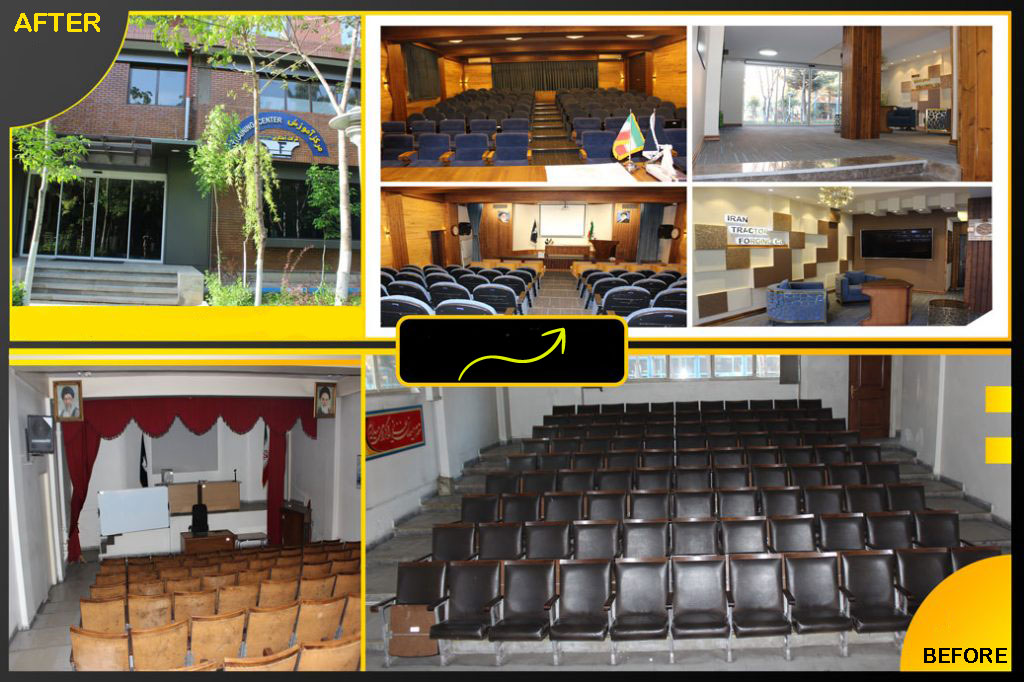
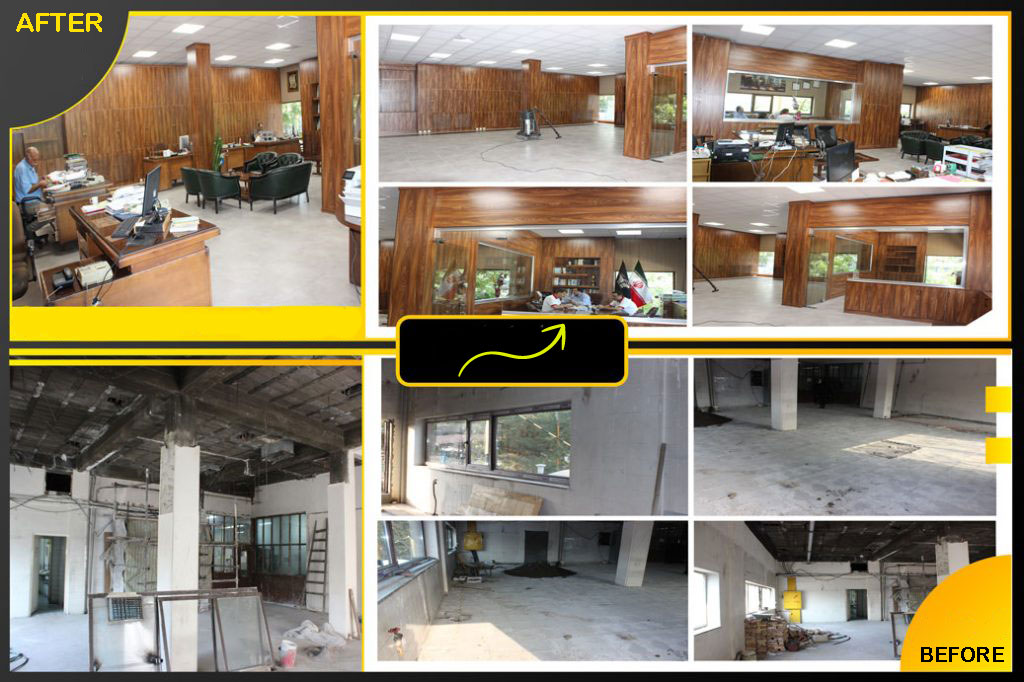
The plan to establish the Iran Tractor Manufacturing Company was implemented in October 1967, in accordance with the provisions of a technical and economic cooperation agreement between the governments of Iran and Romania, with the aim of manufacturing a 65-horsepower universal tractor. A review conducted in 1974 led to a contract with MF England for the production of MF tractors. In 1975, the plan to establish the Iran Tractor Manufacturing Company was divided into five projects: parts manufacturing and tractor assembly, industrial services, casting, engine manufacturing, and forging. The forging project was established on an 11-hectare area, based on well-defined plans to produce all the forged parts required by the tractor manufacturing group and other companies and institutions needing forged parts. The purchase and installation of the required machinery were planned and implemented in two phases. The first phase, involving the purchase, installation, and commissioning of press lines, was completed in 1978 and put into operation in 1981. The second phase, beginning in 1978 with necessary studies conducted with the help of English consultants and in cooperation with the German company Fumuco, led to the purchase of horizontal forging machines and auxiliary machinery for the forging production lines in 1982. The installation and commissioning stages then began and were completed in February 1987. Based on the separation plan, the tractor manufacturing plant was registered as an independent company in December 1986. In 1997, in line with the government's long-term policies to privatize state-owned organizations and change the company's status from a private limited company to a joint-stock company, the necessary preparations were made to offer the company's shares on the stock exchange, and shares were offered to applicants. Privatization, coupled with a decrease in demand and a severe recession in the market, had adverse effects on auto parts manufacturers and posed serious challenges to Iran Tractor Forging Company. In the early 2000s, the company was on the verge of collapse, and 250 of its workers did not receive their wages and benefits for 18 months. Ultimately, the majority of the company's shares were transferred to the current management, the Bavilay family, in 2009. Afterward, significant steps were taken towards progress, and by equipping the site with the most advanced equipment in the world, the company was able to become a leading company in forging, mold making, heat treatment, quality control, and machining, providing extensive services to various industries. Now, the forging company produces a wide range of important and safety-critical parts for various industries, including automotive, agriculture, oil and gas, rail and marine, road and construction, mining, and general engineering.