


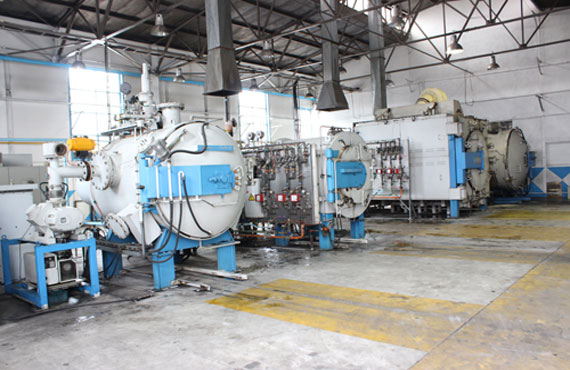
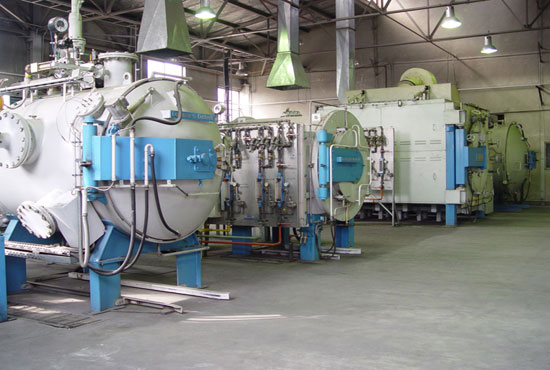
One of the essential requirements in mold making industries is heat treatment processes such as hardening and nitrocarburizing in vacuum furnaces. Our company operates four such furnaces. Vacuum heat treatment furnaces, due to the extremely low pressure in their environment, prevent the oxidation and carburization of metal surfaces, resulting in a cleaner finish. These furnaces have dimensions of 2000mm x 1000mm x 1000mm and a weight capacity of 2500kg.
-
Heat Treatment Processes: This type of heat treatment furnace can perform the following processes:
- Hardening
- Normalizing
- Annealing
- Stress relieving
- Gas nitriding
- Nitrocarburizing
- Plasma nitriding
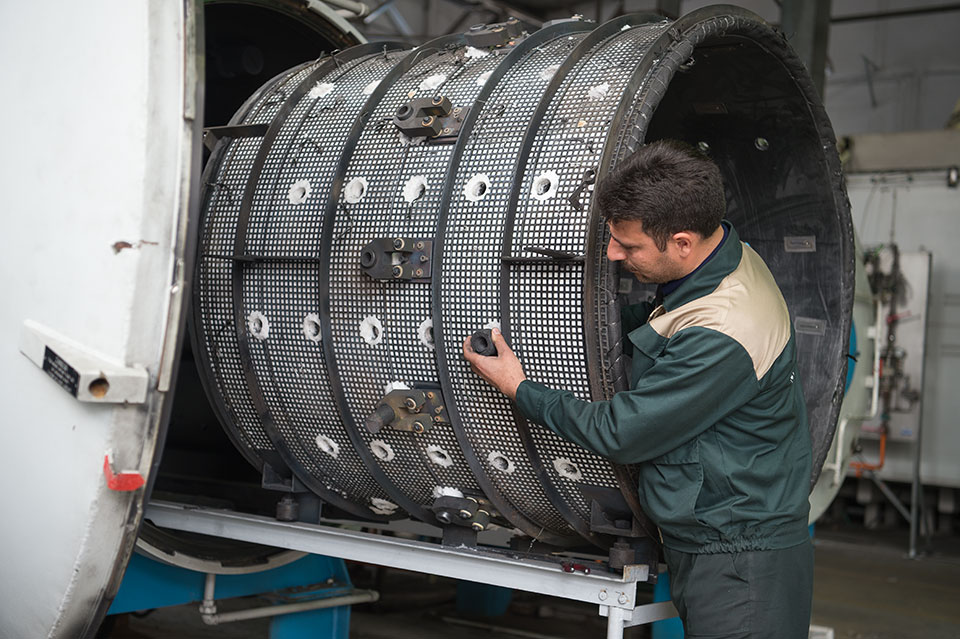
The maximum temperature for heat treatment in a vacuum furnace is 1350 degrees Celsius. The furnace atmosphere is a vacuum, and since heating is achieved through radiation, it is less accurate at lower temperatures and more suitable for high-temperature applications. The heating system in vacuum furnaces utilizes graphite fabrics, which are heated by internal heaters, causing the parts placed within to heat up. This heat is generated through radiation, turning the fabrics red-hot. The furnace consists of two chambers: a cooling chamber at the entrance and a heating chamber. The cooling chamber, equipped with fans and oil circulation, reduces the temperature of the parts. The heating chamber, where parts are placed to reach the austenitizing temperature, contains the graphite fabric.
Additional Systems:
Vacuum heat treatment furnaces are equipped with additional systems such as:
- Fan-based air circulation system
- Automatic temperature control system
- Oil temperature control system